
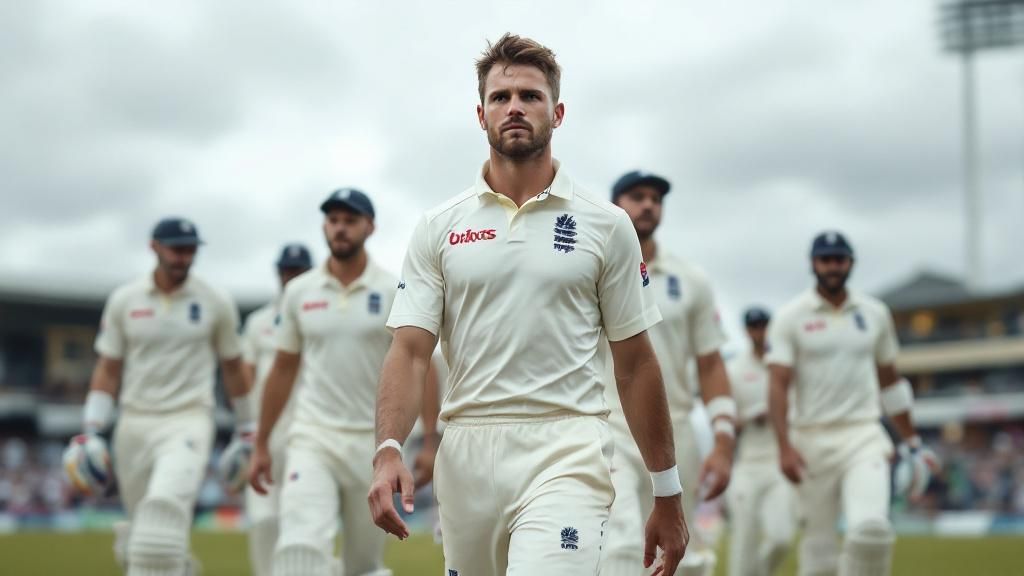
England and Wales Cricket Board head of operations Gould has reaffirmed his backing for managing director Rob Key, head coach Brendon McCullum and captain Ben Stokes, despite growing criticism from recently departed players. The show of support comes in the wake of England’s 4-1 Ashes defeat in Australia this winter and a wave of complaints from former squad members including Jonny Bairstow, Reece Topley, Ben Foakes and David Willey, who have joined Liam Livingstone in raising questions about the existing leadership. Gould justified the decision to retain the leadership trio, contending that the ECB must focus resources on players within the system rather than those who have left the fold.
Gould’s Firm Defence of Management Framework
Gould downplayed claims that the players’ complaints represents a crisis damaging the opening of the domestic season, which commences on Friday. He maintained the ECB continues to be focused on a positive trajectory, highlighting positive signs across grassroots cricket engagement and spectator turnout. “I really don’t agree with that,” Gould remarked when pressed on whether doubt was dominating the fresh start. He characterised the Ashes reversal as a passing difficulty rather than proof of deep-rooted issues demanding wholesale changes to the organisational hierarchy.
The ECB chief executive recognised the difficulty players face when leaving the England system, but contended this was an unavoidable result of professional sport selection. With approximately 300 players seeking to represent England in all formats, Gould contended the organisation must concentrate its resources carefully on those currently in the teams. He expressed understanding that dropped players would understandably disagree with decisions impacting their careers, but stressed the ECB’s approach prioritises long-term squad development over managing the complaints of those beyond the core group.
- Gould dismisses concept of emergency overshadowing county season start
- Recreational game metrics and attendance figures remain positive
- Ashes defeat described as short-term setback, not deep-rooted problem
- ECB must concentrate resources on players within current teams
Increasing Chorus of Criticism from Departed Players
Bairstow and Livingstone Head Complaints
Jonny Bairstow, absent from England cricket since 2024, has become one of the most vocal critics of the existing setup, arguing that those in charge must bring back “the care back in the game”. His contribution proved particularly significant considering his status as a former senior player, adding credibility to emerging concerns about player welfare within the system. Bairstow’s main grievance centres on what he perceives as a binary approach to selection, whereby outgoing players find themselves straight away cast adrift with scant support or dialogue from the ECB hierarchy.
Liam Livingstone, who last represented England during the Champions Trophy last March, has expressed similarly damning evaluations of the organisational framework. Speaking to Cricinfo earlier this month, Livingstone stated that “no-one cares” about players outside the inner circle, whilst recounting how he was told he “cares too much” when seeking assistance during his absence from the squad. His comments suggest a gap between player expectations regarding player welfare and the ECB’s approach to operations, raising questions about duty of care players moving out of international competition.
Further Issues from Recent Departures
Reece Topley has portrayed Livingstone’s criticism as notably restrained, indicating the concerns run significantly deeper than stated openly. This evaluation from a fellow recently-left team member emphasises the scale of discontent simmering within the ex-England group. Topley’s readiness to support Livingstone’s concerns points to a coordinated frustration rather than individual complaints, conceivably indicating organisational failings within the ECB’s oversight of player changes and ongoing support mechanisms for those no longer in contention.
Ben Foakes has highlighted operational shortcomings in England’s operational infrastructure, disclosing that reserve batsman Keaton Jennings functioned as wicketkeeping coach during one tour despite no dedicated specialist being established in the role. This finding exposes resource management problems within the ECB’s coaching setup, indicating cost-cutting approaches that may undermine player development and support. Foakes’s specific example provides tangible proof supporting wider concerns about the leadership’s performance and dedication to backing players sufficiently.
- Bairstow demands restoration of care across England cricket system
- Livingstone asserts leadership overlooks concerns from departing players
- Topley supports criticism, indicating broad-based systemic discontent
- Foakes highlights insufficient coaching resources and resource allocation
The Wider Context of England’s Winter Challenges
England’s underwhelming 4-1 Ashes loss in Australia this winter has triggered intensified scrutiny of the ECB’s management structure and decision-making processes. The scale of the series loss has lent credibility to former players’ concerns, with the on-field results seemingly validating concerns about the regime’s performance. Gould’s decision to retain Key, McCullum and captain Ben Stokes in the face of this major disappointment has only amplified discussion within the cricketing world, forcing the ECB leadership to publicly defend their long-term direction whilst facing escalating pressure from various sectors.
The ECB chief executive has described the winter campaign as merely “a temporary setback we will overcome,” working to position the defeat within a wider context of organisational success. Gould cites positive metrics in grassroots cricket engagement and growing audience numbers as proof of institutional health. However, this positive presentation sits uneasily alongside the harmful accounts from recently-exited players, forming a divide between the ECB’s self-assessment and the personal accounts of those leaving international cricket, particularly regarding support mechanisms and welfare support.
| Challenge | Impact |
|---|---|
| 4-1 Ashes series defeat in Australia | Undermined confidence in current management and strategic direction |
| Inadequate support for departing players | Created perception of callous transition process and damaged player relations |
| Resource allocation and coaching infrastructure gaps | Compromised squad development and exposed operational inefficiencies |
| Disconnect between ECB messaging and player experiences | Eroded trust and credibility of leadership amongst former internationals |
European Tournament Plans and Future Scheduling
The ECB’s tepid response to proposals for a inaugural European Nations Cup has revealed further strategic divisions within cricket’s governance structures. Cricket Ireland chair Brian MacNeice revealed that talks were advancing with relevant organisations to create an annual tournament bringing together European nations from 2027 onwards, including both men’s and women’s competitions. The proposed event would unite Ireland, Scotland, the Netherlands and potentially Italy in early summer fixtures, with England’s involvement seen as commercially vital to securing broadcasting deals and securing appropriate venues throughout Europe.
However, Gould has effectively downplayed England’s likelihood of involvement, indicating the ECB holds concerns about the tournament’s feasibility and attractiveness. The ECB previously engaged in talks with Cricket Ireland throughout September’s white-ball series, yet no firm commitment has materialised. Gould’s measured approach reflects broader concerns about scheduling pressures and the emphasis on established bilateral series over developing tournament structures. The hesitancy also underscores underlying friction between the ECB’s business objectives and its commitment to backing developmental opportunities for neighbouring cricket nations.
Why England Remains Hesitant
England’s hesitation stems partly from practical scheduling constraints and the absence of purpose-built international venues readily available across Europe. The ECB’s focus on increasing commercial gains through traditional bilateral matches with traditional cricket nations takes priority over experimental tournament formats. Additionally, fixture congestion worries and the complexity of coordinating various nations’ fixtures create logistical obstacles that the ECB appears unwilling to navigate without stronger financial commitments and broadcasting agreements from proposed stakeholders.
Looking Ahead: Positive Metrics Amid Turbulence
Despite the considerable scrutiny surrounding England’s Ashes defeat and subsequent player criticism, the ECB leadership stays optimistic about the organisation’s path forward. Gould has stressed that the current controversy should not overshadow the beginning of the domestic season, which commences on Friday with fresh confidence. The ECB chief rejected suggestions that negativity is eroding the sport’s momentum, instead referencing encouraging data across several key indicators. Recreational participation numbers have grown, attendance figures hold steady, and broader engagement metrics demonstrate encouraging expansion, suggesting the grassroots health of English cricket endures solid despite top-tier challenges.
Gould characterised the winter’s underwhelming outcomes as merely “a temporary setback we can overcome,” demonstrating the ECB’s firm commitment that immediate challenges should not shape long-term strategic direction. The ECB’s leadership team has underlined their dedication to the existing leadership framework, with Key, McCullum and Stokes maintaining their positions. This steadfastness, whilst disputed by some ex-cricketers, demonstrates the ECB’s belief that the current structure can achieve success. The focus now shifts toward rebuilding confidence and proving that the England cricket programme demonstrates the resilience and resources necessary to rise above current challenges.
